Evidence Snapshot for Parents and Caregivers: Academic Vocabulary Instruction in K-3
Why academic vocabulary matters Academic vocabulary includes the words children need to understand instructions, learn from books, and succeed in school—especially in subjects like science, math, and social studies. Unlike everyday words, academic vocabulary often needs to be taught directly. When children understand these words, they are better able to follow lessons, express their ideas, […]
Evidence Snapshot for Educators: Academic Vocabulary Instruction in K-3
Why it matters What works best: evidence-based practices Choose high-utility words Explicitly teach the words Talk about the words Embed vocabulary in content areas Key takeaways from the research Explicit instruction works: Nearly all high-quality studies showed positive effects on vocabulary learning when teachers used structured, direct methods. But… standardized test gains are rare: Gains […]
Evidence Snapshot for Educator Preparation Providers: Academic Vocabulary Instruction in K-3
Why it matters Academic vocabulary and language skills are foundational to reading comprehension and long-term academic success. Gaps in these skills, especially among English Learners (ELs) and students from low-resource environments, emerge early and persist without targeted intervention. The most effective way to address these disparities is by preparing teachers who can deliver integrated, research-aligned […]
Evidence Snapshot for Education and Civic Leaders: Academic Vocabulary Instruction in K-3
Why it matters Students who don’t master academic vocabulary in the early grades are at greater risk of struggling with reading comprehension throughout school. For English Learners (ELs) and children from under-resourced homes, the risks are even higher. This review synthesizes the findings from 23 studies involving over 6,000 K–3 students to inform evidence-based action. […]
The Effects of Academic Vocabulary Knowledge Interventions: A Systematic Review
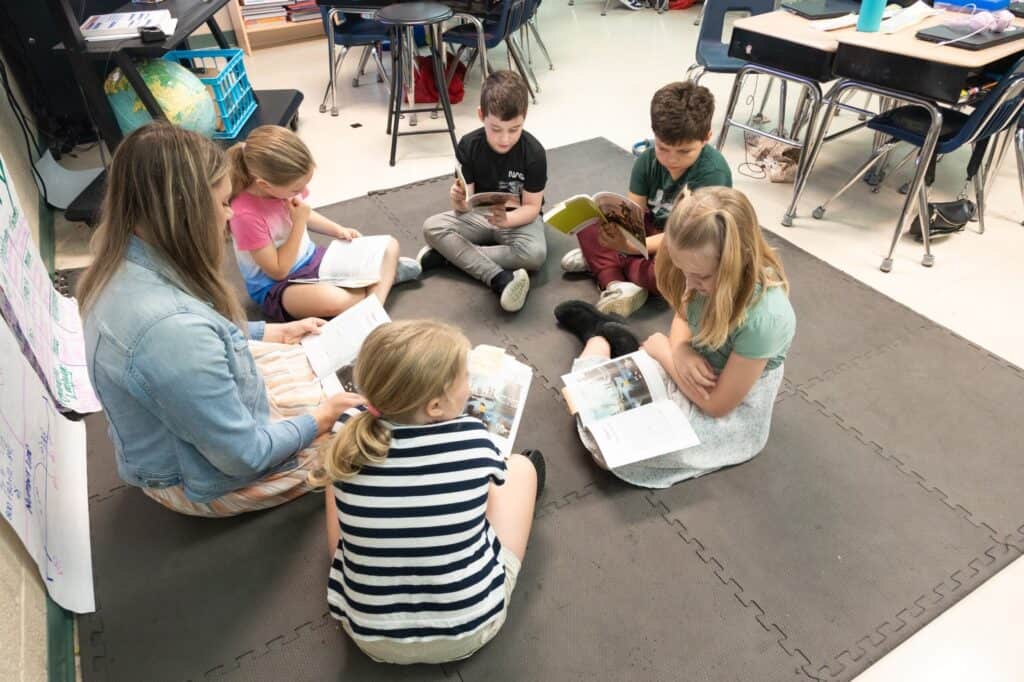
Abstract Vocabulary is one of the five core pillars of reading development (National Reading Panel, 2000), and substantial evidence links vocabulary knowledge to reading comprehension (e.g., Elleman et al., 2009) and word learning (e.g., Storch & Whitehurst, 2002). The Institute of Education Sciences’ (IES) What Works Clearinghouse (WWC) Practice Guide on foundational reading skills identified […]
Evidence Snapshot for Education and Civic Leaders: Effective K-3 Phonics Instruction

Why it matters Evidence at a glance Policy and leadership actions Leadership takeaway Equitable literacy starts with strong Tier 1 phonics instruction, aligned with intervention supports across all tiers. Early investment in research-based reading practices prevents later remediation. The information provided in this summary is based on findings from A Review of Phonics Interventions or Practices […]
Evidence Snapshot for Parents and Caregivers: Helping Your Child Learn Phonics

Why phonics matters How you can help at home What to watch for Family takeaway You don’t have to be a reading expert to make a big impact. Talking, reading, and practicing sounds and words with your child at home helps them become a stronger, more confident reader. The information provided in this summary is […]
Evidence Snapshot for Educators: Effective Phonics Instruction

Why phonics matters Key practices for effective instruction What to watch for Tips by student group Multilingual learners Students with disabilities At-risk students Classroom takeaway Phonics isn’t just for beginning readers—it’s a building block for comprehension and long-term success. To help every student thrive: ✅ Make phonics systematic and explicit. ✅ Align Tier 1 instruction with Tier […]
Oral Fluency Interventions for K-3 Students

A systemic review to evaluate research from 2014-2025 on oral reading fluency with kindergarten through third grade students. Abstract Oral reading fluency is key to proficient reading. Students who can read fluently are able to expend more of their energy on comprehending what they are reading. The purpose of this systematic review was to evaluate […]
Evidence Snapshot for Educator Preparation Providers: Preparing Future Teachers to Teach Phonics Effectively

Why it matters Research highlights (2014–2024) Program design considerations Preparation takeaway To equip future educators for success, phonics instruction must move beyond theory. Practice-driven, research-aligned training in explicit phonics methods is essential for ensuring reading success for all students. The information provided in this summary is based on findings from A Review of Phonics Interventions […]