Why This Matters
- Children begin developing literacy skills long before they can read independently.
- Everyday experiences with talking, listening, books, sounds, letters, and writing help prepare children for school.
- Children need both sound and language skills to become successful readers.
- Early support can help children who are having difficulty with foundational literacy skills.
What the Evidence Shows
- Children benefit when adults clearly model literacy skills and give them opportunities to practice.
- Short, frequent practice is more helpful than occasional, lengthy lessons.
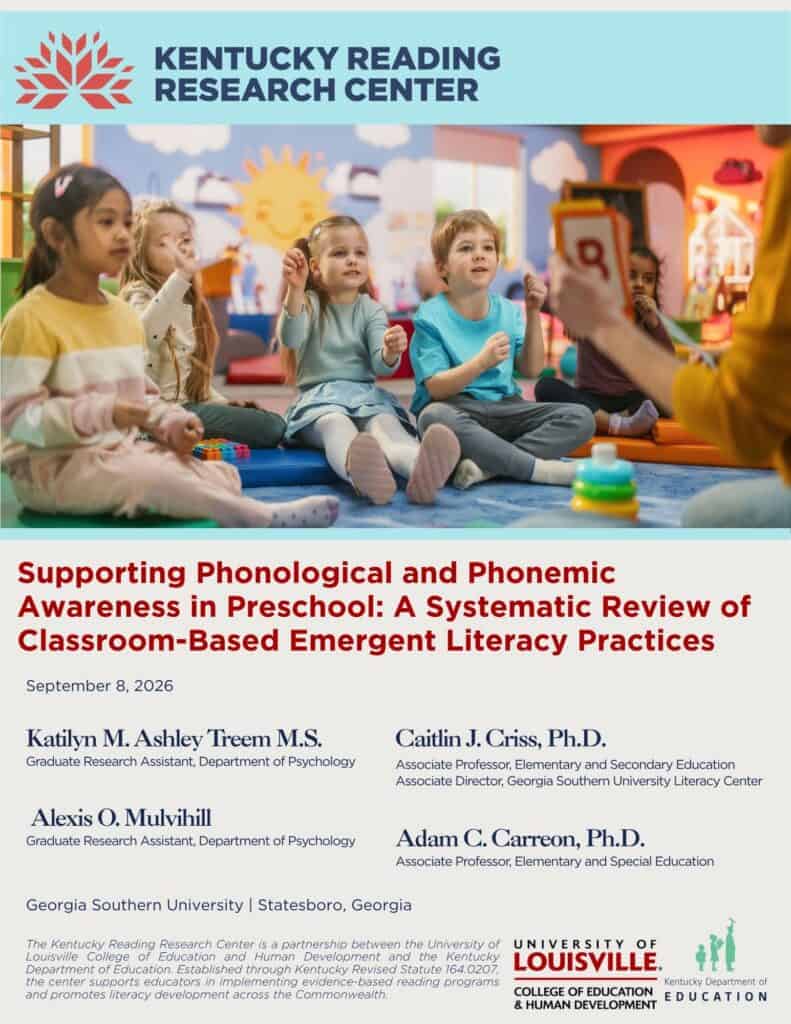
- Talking, reading, playing, singing, and writing can all support early literacy development.
- Children benefit when adults connect the sounds they hear in words with the letters they see.
- Learning is strengthened when children can hear, see, say, move, and touch as they explore sounds and letters.
- Shared reading is especially valuable when adults ask questions, encourage children to talk, and introduce new words.
What to Watch For
- Your child consistently has difficulty hearing rhymes or noticing sounds in words.
- Your child has difficulty learning or remembering letters and their sounds.
- Your child struggles to put sounds together to make a word or identify the separate sounds in a word.
- Your child has difficulty learning or using new words.
- Your child becomes frustrated during literacy activities or needs much more help than expected.
- Remember: difficulty with a skill is a reason to provide support—not a reason to label a child as unable to learn.
Tips for Supporting Your Child
- Talk: Have conversations throughout the day and introduce new words.
- Read: Read together regularly. Ask questions and encourage your child to explain ideas.
- Play with sounds: Sing songs, play rhyming games, and notice beginning sounds in words.
- Explore letters: Point out letters and talk about the sounds they represent.
- Write: Encourage drawing, pretending to write, forming letters, and writing names or familiar words.
- Use everyday moments: Signs, labels, shopping lists, menus, and books can all become opportunities to notice letters and sounds.
- Keep it positive: Short, enjoyable practice repeated often is better than turning literacy into a long or frustrating lesson.
Equity Considerations
- Children develop language and literacy in different ways and at different rates.
- Families can support literacy in any language. Talking, storytelling, sharing books, and building vocabulary all provide valuable language experiences.
- Children who need additional support may benefit from more frequent practice and intentional instruction at home and school.
- Work with your child’s teacher when you have concerns about language or early literacy development.
Key Takeaway
You do not need a formal reading lesson at home. Talk, read, play with sounds, explore letters, and encourage writing—and make these experiences short, frequent, and enjoyable.
The information provided in this summary is based on findings from Supporting Phonological and Phonemic Awareness in Preschool: A Systematic Review of Classroom-Based Emergent Literacy Practices.