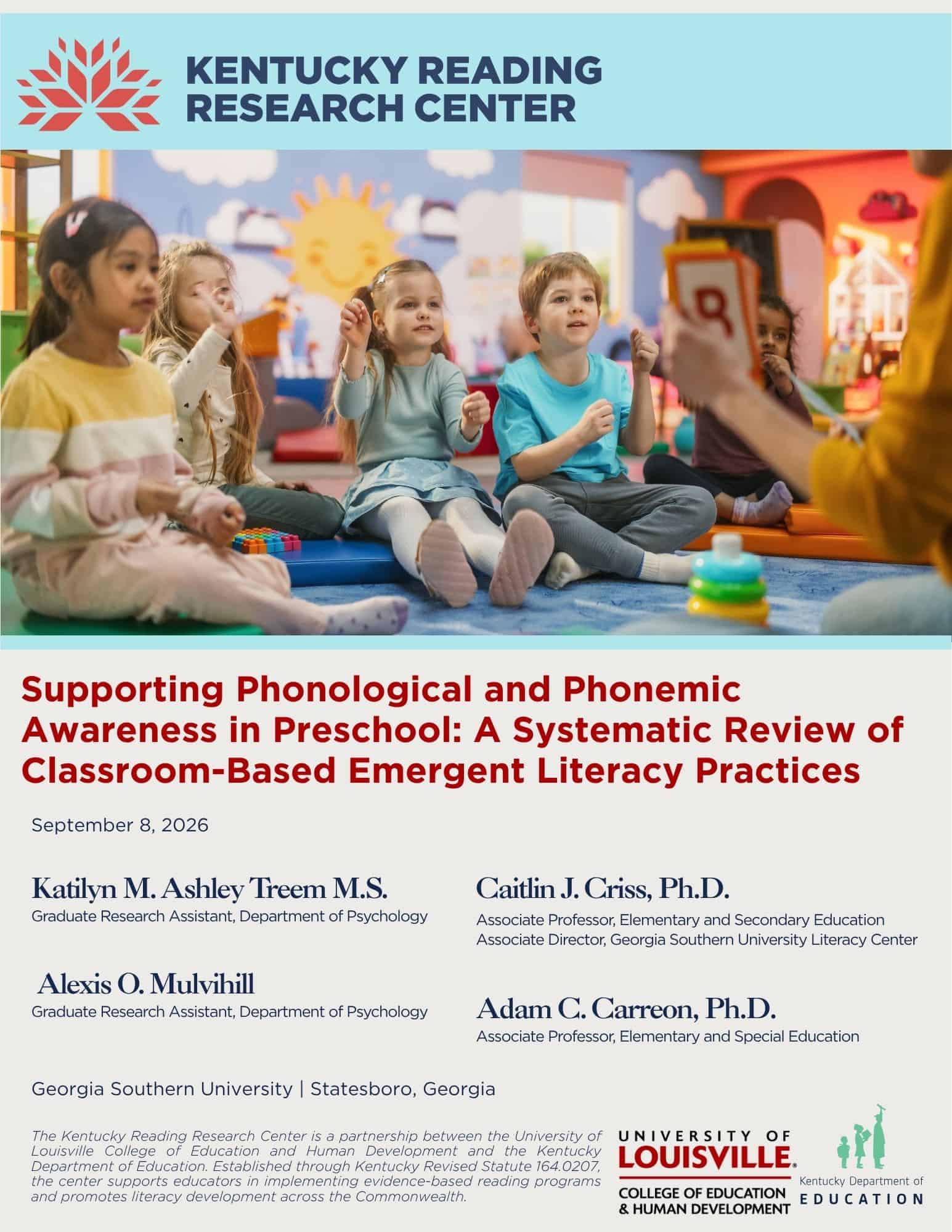
Emergent literacy skills provide the foundation for children to enhance their reading development and academic success. However, many children enter kindergarten with literacy deficits which may contribute to reading difficulties as they progress through school. Thus, the purpose of this systematic review was to synthesize evidence-based instructional practices and literacy domains by examining preschool classroom-based interventions. We identified 18 peer-reviewed studies representing 5,137 children between the ages of three and five. Our findings indicate that explicit, systematic, and scaffolded instruction were the most consistently used and effective practices for supporting phonological and phonemic awareness. Overall, the findings suggest that effective preschool literacy instruction should address emergent literacy as an integrated, multidimensional developmental process. Overall, the findings suggest that brief, frequent interventions that address multiple literacy domains simultaneously yield meaningful gains across diverse populations, reinforcing the idea that effective preschool instruction should treat emergent literacy as an integrated, multidimensional developmental process that lays the foundation for long-term reading success.